
Software Basics
How to Reduce No-Shows and Last-Minute Cancellations in a Trade Business
You arrive on time, knock, wait, and nobody comes. How to reduce no-shows and last-minute cancellations by making it easy for customers to keep, move or cancel.
 13 min read
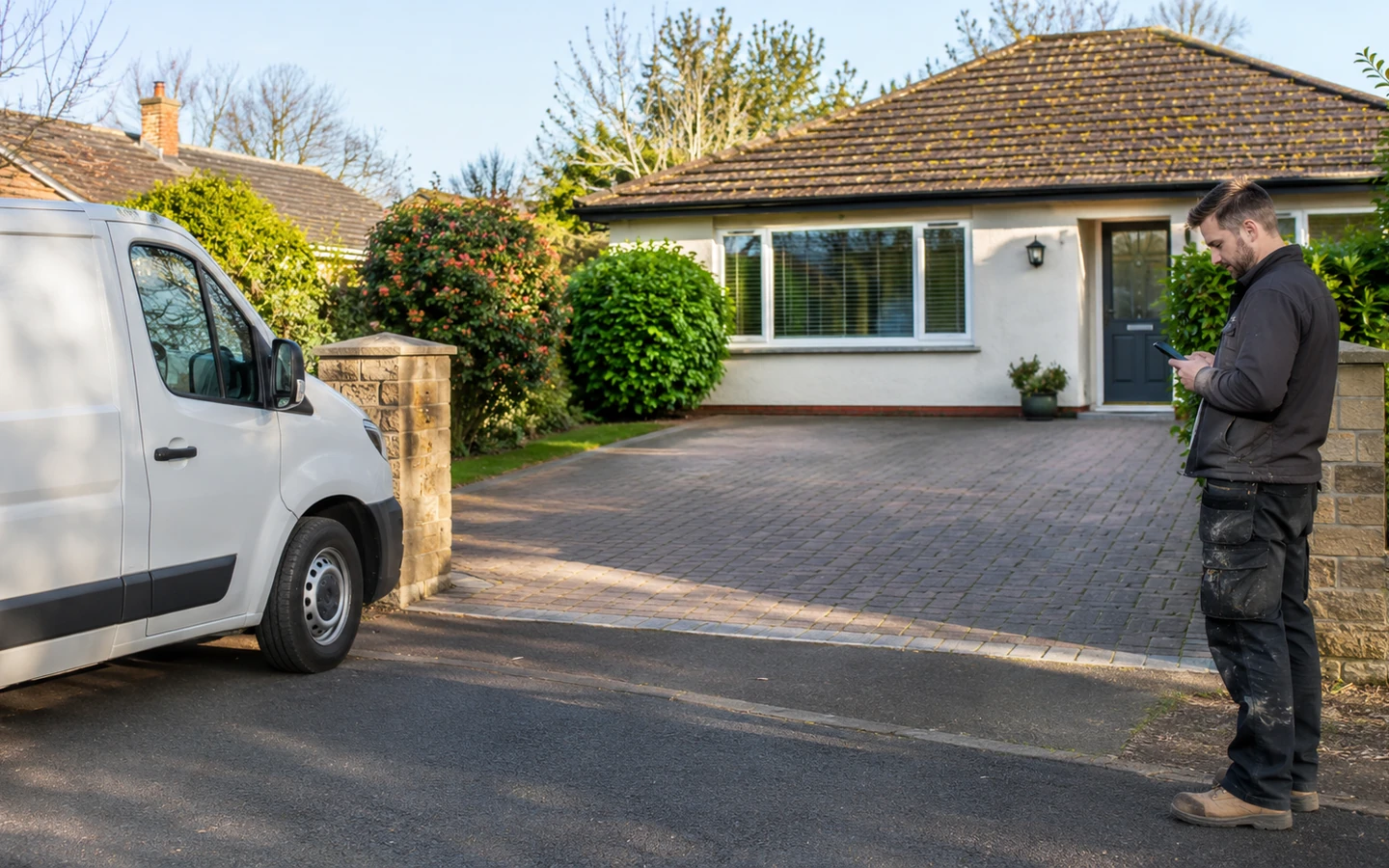
To reduce no-shows, it helps to know that most customers who miss appointments haven't decided to; they've forgotten, or felt too awkward to say.
You pull up outside the house at ten past nine. The van is clean, the parts are on board, the diary says nine o'clock and you're ten minutes late because of the roadworks.
You knock. Nothing. You ring the bell, wait, knock again, and phone the number on the booking. It goes to voicemail. You stand on the doorstep for another five minutes, looking at the street, doing the sums in your head about what the morning has just cost you.
Everyone who works in the trades has been here. This guide is about how to reduce no-shows, and it starts from a point that may surprise you: most missed appointments aren't acts of disrespect. They are small failures of memory and communication, which means most of them can be prevented. You'll find out why customers don't turn up, the three moments when a message makes the biggest difference, a simple trick that makes people far more likely to keep their word, and how to build a fair cancellation rule that doesn't sour the relationship.
What a missed appointment really costs you
It's easy to think of a no-show as an hour lost. In truth, the damage spreads wider.
There's the time itself: the drive, the wait, the drive on. There's the slot you can't refill, because it's too late to offer it to anyone else. There's the knock-on effect on the next job, which now starts late or gets squeezed. There's the fuel, and the quiet irritation that carries into the rest of the day.
And if you're doing jobs that need a particular part ordered or a particular person booked, the cost can be larger still.
Here's a hypothetical example, using round numbers. You lose ninety minutes because of a no-show. If your time is worth $40 an hour, that's $60, plus the van costs. If one job in twenty goes this way and you do ten jobs a week, you lose a couple of hours every month. Over a year, that's a full working week or more.
It's not dramatic, but it adds up, and the cost falls entirely on you.
The good news is that a few small changes can cut it substantially. And they don't require you to become stricter or less friendly.
Why customers really miss their appointments
Before fixing a problem, it helps to understand it. When you think about why people don't show up, a few causes come up again and again.
They forgot. The booking was made days or weeks ago. Life got busy. Nothing reminded them.
They got the time or day wrong. A verbal agreement, a half-heard conversation, a confusing message. They honestly thought it was tomorrow.
Something came up. A child was sick, work ran late, the car broke down. They meant to tell you but didn't get round to it.
They changed their mind. They found someone cheaper or quicker, or decided to wait. They didn't know how to tell you without feeling awkward.
They didn't feel it mattered. If the booking felt casual, the cancellation feels casual too.
They were afraid of the conversation. Cancelling means admitting to a change of plan, maybe explaining. Some people avoid it by simply not responding.
Notice something about this list. Only the last two involve a conscious choice, and even they come from awkwardness rather than malice.
This is encouraging because it suggests where to act. If most no-shows come from forgetting, confusion and awkwardness, then clear reminders and easy ways to cancel should solve a large share.
The three moments when a message matters most
You don't need to bombard customers with messages. Three well-placed ones usually do the job.

Moment one: right after booking. Send a confirmation straight away. Include the date, the time or window, the address, what the job is and your phone number. It acts as a receipt, and it catches errors early. If a customer reads "Thursday at 9" and thinks they said Friday, they have time to say so.
Moment two: the day before. A reminder the day before is the workhorse of reducing no-shows. It arrives when the appointment is close enough to feel real but far enough away to rearrange.
Moment three: on the way. A short message when you set off: "Alex is on his way and should arrive around 9." This lets the customer know to be ready, and it catches anyone who has forgotten.
Three messages, each with a different purpose. The first prevents mistakes, the second prevents forgetting and the third prevents surprises.
Many job-management tools can send reminders and "on the way" messages automatically. Whether they are included depends on the product and plan, so ask each provider in writing and test the messages by sending them to your own phone. If you work by hand, saved text snippets on your phone do the same job.
Our guide on choosing simple field-service software suggests testing how a tool handles reminders when you trial it.
The reply-to-confirm trick that people actually follow
Here is the idea that makes the biggest difference.
A reminder that says "See you tomorrow" is passive. The customer reads it, thinks "yes, fine", and moves on. Nothing in their brain commits to anything.
A reminder that asks for a reply is active. "Please reply YES to confirm tomorrow's 9am visit, or let me know if you need to move it." The customer has to do something, even something tiny, and that small action creates a sense of commitment.
It also does two other things. It gives people an easy way to say they can't make it, which they might otherwise avoid. And it gives you information: if there's no reply by evening, you know there's a risk, and you can phone.
People tend to follow through on things they have actively agreed to, even in a small way. Just ask for a response.
Here's a message you can adapt:
"Hi Sam, a reminder that Alex is booked to fix your tap tomorrow between 9 and 11. Could you reply YES to confirm? If you need to change anything, just say and we'll sort it. Thanks!"
Keep it friendly, short and clear. And make sure the "yes" is one word.
If you don't receive a reply, send a second message or phone in the evening. It's a small effort compared with a wasted morning.
Make cancelling easy (it sounds backwards, but it works)
Many businesses make cancellation difficult, thinking this will discourage it. In practice, it often does the opposite.
If cancelling is awkward, people avoid it. They don't ring. They don't message. They just don't turn up. You find out when you're standing on the doorstep.
If cancelling is easy, people do it earlier. They reply "Sorry, can we move it?" the night before. You get a chance to rearrange, offer the slot to someone else, or at least stay in the office instead of driving across town.
So make it simple. Tell customers how to change or cancel in every message: "Reply CHANGE to rebook." Give them a phone number and a message option. Respond kindly when they do.
Take the sting out. If you make people feel bad for cancelling, they'll hide it next time. A calm "No problem, thanks for letting me know" builds the habit of telling you.
Then use the extra notice. A cancelled slot with twenty-four hours' warning is a slot you can try to fill. Keep a short list of customers who'd like an earlier date if one comes up. A quick message with a message like "A gap has opened tomorrow morning. Would you like it?" can turn a cancellation into a booking.
It's a bit like fishing: you want people to tell you they're not coming as soon as possible, rather than late. Everything that makes cancelling earlier is on your side.
What to do about the customer who's still not there
Even with good reminders, some no-shows will happen. Having a plan makes them less stressful.
Wait a reasonable time. Fifteen minutes is common. Longer rarely helps.
Try to reach them. Phone, then text. "Hi Sam, I'm at your door. Are you on your way?" Sometimes they're stuck in traffic and will arrive soon.
Record it. Note the time you arrived, the attempts to contact and the photo of your van outside if it helps. This is useful if there's a disagreement about a fee. Our guide to job notes that protect you in a dispute shows how to keep it brief.
Leave a note if appropriate. A card through the door saying you called, with your number, is courteous.
Use the gap. If you can, make use of the time: call a customer on your list, do your admin, restock. It stops the wasted time from being entirely wasted.
Follow up calmly. Later, send a polite message. "Sorry we missed you today. Could we rebook? Please let me know if there was a mix-up." Many customers will be mortified and grateful for the gentle tone.
How you react to the first no-show sets the tone for the relationship. If you're calm, most people respond with apology and loyalty. If you're angry, they may disappear.
A fair cancellation rule, in words a customer would accept
If no-shows are costing you real money, you may want a rule. The key is to make it fair, clear and visible before it matters.
Here's a simple structure.
Plenty of notice: no charge. If the customer cancels well in advance, you can refill the slot, so there's no loss.
Short notice: a small fee or a loss of deposit. If they cancel late, you may have lost the chance to fill the slot. A modest charge reflects that.
No-show: a larger fee or deposit forfeited. If they don't turn up at all, you have lost the time and costs.
Your cancellation: full refund and an apology. The rule works both ways. If you need to cancel, make it right.
Choose the notice period to suit your business. A one-day job might need twenty-four hours. A multi-day project might need a week.
Then tell people. Put the rule in your booking confirmation, on your quote and on your website. State it plainly: "If you need to cancel, please let us know at least 24 hours before. Late cancellations may incur a charge to cover the time we've reserved."
A deposit helps enforce it. When a customer has paid something to reserve the slot, the commitment is real. Our guide to taking a deposit on a trade job explains how.
This isn't legal advice. Consumer rules about fees and cancellations differ by country and type of work, so check the official guidance where you operate, and ask a trade body or adviser if unsure.
Using fees sparingly: when to waive them
A rule is only useful if you apply it sensibly. There will be times when charging the fee would be unwise or unkind.
Genuine emergencies. If a customer cancels because of illness, bereavement or an accident, waive the charge with sympathy. They will remember.
First offences. For a good customer's first slip, a gentle warning is often better than a charge. "Just so you know, there is a late cancellation fee, which I've waived this time."
Regular customers. You may choose to be flexible with someone who's been loyal for years. Decide this as a rule, not a mood.
When the confusion was yours. If your message was unclear or you mixed up the day, own the mistake and don't charge.
When the cost outweighs the benefit. For a small amount, a long argument isn't worth it.
Waiving a fee is a gift, and it works best when the customer knows it's a gift. "I've waived the fee this time" is a better phrase than silence.
At the same time, don't be afraid to apply the rule when it's warranted. A customer who repeatedly misses appointments is costing you, and a fair, firm response protects your time and your other customers.
Spotting the risky bookings before they happen
Not all appointments carry the same risk. With experience, you can spot the ones more likely to go wrong.
Long lead times. The further ahead a booking is made, the more likely it is to be forgotten. Add an extra reminder for bookings made weeks ahead.
Vague details. If the customer was unsure about the date or the job, confirm it carefully.
Unreachable contacts. A single phone number that goes to voicemail is a warning. Ask for a second way to reach them.
Third-party bookings. If someone books on behalf of a landlord, a parent or a neighbour, the person who needs to be home may not know. Ask who will be there, and check they have the details.
Access needs. If you need a key, a gate code or someone present, confirm the arrangements.
Impulse bookings. Someone who booked at midnight after a glass of wine may reconsider in the morning. A confirmation reply is especially useful here.
For these, add a phone call or a second reminder. It takes a minute and may save a morning.
You can also record what you learn. If a particular type of booking goes wrong often, adjust how you take it. For instance, ask for a deposit on long-lead bookings, as in our guide to online booking for trade businesses.
A message kit you can copy today
Here's a set of messages in one place. Change the wording to suit your voice.
Booking confirmation "Hi [name], you're booked in for [job] on [day] between [time] and [time] at [address]. If anything changes, reply or call [number]. Thanks, [your name]."
Day-before reminder (with reply) "Hi [name], a reminder that we're booked to [job] tomorrow between [time] and [time]. Could you reply YES to confirm? If you need to move it, just say."
On the way "Hi [name], [colleague] is on the way and should arrive around [time]."
No reply the evening before "Hi [name], just checking you saw the reminder for tomorrow's visit. Please let me know it's all still fine, or if we should rearrange."
At the door, no answer "Hi [name], we're outside your house for the [time] appointment. Can you let me know if you're on your way?"
Rebooking after a missed visit "Hi [name], sorry we missed each other today. I'd be happy to rebook. When would suit you? If something came up, no worries at all."
Cancellation policy line "If you need to cancel or move your booking, please let us know at least [24 hours] beforehand. Late cancellations may be charged to cover reserved time."
Save these on your phone as shortcuts. Then you can send them in seconds.
A seven-day trial to see how much difference it makes
Don't rely on guesses. Try the changes for a week and compare.
Before you start: Note how many appointments you had in the last month and how many were missed, cancelled late or moved at the last minute. This is your baseline.
Day 1: Write your messages and save them on your phone.
Day 2: Start sending a confirmation at the moment of booking.
Day 3: Begin sending a day-before reminder that asks for a reply.
Day 4: Add an "on the way" message to your routine.
Day 5: Add your cancellation line to your confirmation.
Days 6 and 7: Keep going, and note any replies, changes and problems.
At the end of the week, compare. How many people replied? How many rescheduled early? Did any miss the appointment?
A week is a short sample, so keep the habit for a month before drawing firm conclusions. But even in the first week, you will probably see people confirming and moving appointments earlier than they would have.
When the new routine is working, mention it in your weekly business review so you can track it over time.
Where to go from here
Missed appointments feel like a fact of life in the trades, but most of them are a communication problem in disguise. People forget, people mix up days, and people are too awkward to say they can't make it.
Three timely messages, a reminder that asks for a reply, an easy way to change plans, and a fair rule for late cancellations remove most of the pain. And none of it needs you to be harsh.
Start with the reminder tonight. Pick tomorrow's first booking and send the reply-to-confirm message. If the customer replies, you've started a habit that will pay you back all year.